Home Blog Page 4

M.G. Ramachandran: The Legendary Actor, Politician

Maruthur Gopala Ramachandran, popularly known as MGR, stands as one of the most influential figures in Indian cinema and politics. m.g. ramachandran An Indian actor and politician who founded the AIADMK party in 1972 and was chief minister of Tamil Nadu from 1977 to 1987, MGR’s journey from a struggling child actor to becoming one of India’s most beloved leaders remains an extraordinary tale of determination, charisma, and unwavering commitment to public service.

Early Life and Humble Beginnings

Born on January 17, 1917, in Kandy, Sri Lanka, to a Tamil family, MGR faced a challenging childhood after the early demise of his father. His family relocated to Tamil Nadu, where financial struggles compelled him to drop out of school and pursue a career in acting to support his family. This early hardship would later shape his deep empathy for the common people and influence his populist political approach.

The young Ramachandran’s entry into the world of entertainment was born out of necessity rather than ambition. His achievements in three fields—films, philanthropy, and politics—were remarkable considering his humble origins in Sri Lanka. What began as a survival strategy eventually transformed into a legendary career that would span multiple decades and touch millions of lives.

Rise to Cinematic Stardom

MGR’s film career began in the 1930s, and he quickly established himself as a leading actor in Tamil cinema. His on-screen persona was characterized by roles that portrayed him as a champion of the oppressed, a fearless hero who fought against injustice, and a protector of the weak. These roles weren’t just entertainment; they became a reflection of his real-life philosophy and political ideology.

He won the National Film Award for Best Actor for the film Rickshawkaran in 1972. This recognition at the national level validated his acting prowess beyond regional boundaries. MG Ramachandran got several awards including two Filmfare Awards in the category of Best Actor and Best Film and a National Film Award for Best Actor.

His cinematic partnerships were equally noteworthy. His super hit onscreen pairs were P. Bhanumathi, B. Saroja Devi, and J. Jayalalithaa. In the 70s, he mostly paired with Latha Sethupathi. Among these partnerships, his collaboration with J. Jayalalithaa proved to be not just cinematically successful but also politically significant, as she would later become his protégé and successor in Tamil Nadu politics.

The Birth of a Political Legend

MGR’s transition from cinema to politics was seamless, largely because his film roles had already established him as a people’s hero. In 1972, he founded the All India Anna Dravida Munnetra Kazhagam (AIADMK), breaking away from the DMK party due to ideological differences.

The AIADMK alliance won the elections by winning 144 seats out of 234 and Ramachandran became the Chief Minister of Tamil Nadu. Upon winning the 1977 state elections, Ramachandran became the Chief Minister of Tamil Nadu on 30 June 1977, remaining in office till his death in 1987.

His decade-long tenure as Chief Minister was marked by innovative welfare schemes and populist policies that directly benefited the common people. m.g. ramachandran leadership in Tamil Nadu was marked by his strong focus on social welfare and populism. He introduced the mid-day meal scheme for school children, subsidized rice distribution, and various other programs that improved the lives of ordinary citizens.

Revolutionary Policies and Social Impact

MGR’s administration was characterized by several groundbreaking initiatives that were ahead of their time. His government’s focus on education, healthcare, and social welfare created a template that influenced policy-making across India. The mid-day meal scheme, in particular, became a model that was later adopted by the central government and implemented nationwide.

His approach to governance was deeply rooted in his understanding of the common people’s struggles, derived from his own experiences of poverty and hardship. This authenticity resonated with the masses, who saw in him not just a leader but a representative of their aspirations and dreams.

Academic Recognition and Honorary Degrees

Beyond his cinematic and political achievements, MGR’s contributions were recognized by academic institutions. MGR was felicitated with honorary doctorate degrees from the University of Madras and the World University Arizona in 1974. These honors acknowledged his multifaceted contributions to society and his role in shaping Tamil Nadu’s social and political landscape.

The Ultimate Recognition: Bharat Ratna

The pinnacle of MGR’s recognition came posthumously when he was awarded India’s highest civilian honor. He was awarded the highest honor in India, the Bharat Ratna award, posthumously in 1988. This award recognized not just his political achievements but his overall contribution to Indian society through cinema, politics, and social service.

The Bharat Ratna for MGR was particularly significant as it acknowledged the unique role that regional leaders could play in national development. His success in Tamil Nadu demonstrated how effective governance at the state level could create models for national emulation.

Enduring Legacy and Cultural Impact

A charismatic actor and philanthropist, he commanded the idolatrous adulation of millions of Tamilians and became Tamil Nadu’s chief minister. Even decades after his death in 1987, MGR’s influence on Tamil Nadu politics and culture remains profound. His political party, the AIADMK, continues to be a major force in Tamil Nadu politics, and his welfare-oriented governance model continues to influence policy-making.

In recognition of his lasting impact, on 5 April 2019, the Government of India renamed Chennai Central station as Puratchi Thalaivar Dr. m.g. ramachandran Central Railway Station to honor him. This gesture reflects the continued reverence for his contributions to public life.

The Man Behind the Legend

What made MGR truly extraordinary was his ability to connect with people across different spheres of life. Whether as an actor portraying heroic characters on screen, as a philanthropist helping the needy, or as a politician implementing welfare schemes, he maintained a consistent image of being a champion of the common people.

Beyond his cinematic career, MGR is remembered for his lasting impact on Tamil Nadu’s political climate. He is still regarded as a legendary figure in Tamil Nadu history due to his reputation as a leader and performer. His life story continues to inspire countless individuals who see in his journey proof that humble beginnings need not limit one’s potential for greatness.

Conclusion

m.g. ramachandran life represents a unique convergence of entertainment, politics, and social service. His journey from a struggling child in Sri Lanka to becoming one of India’s most celebrated leaders exemplifies the power of determination, authenticity, and genuine concern for public welfare.

His legacy transcends the boundaries of cinema and politics, representing a model of leadership that prioritizes the welfare of the common people. The Bharat Ratna recognition posthumously awarded to him stands as a testament to his extraordinary contributions to Indian society. MGR’s story continues to resonate with millions, serving as a reminder that true greatness lies not in personal achievements alone, but in one’s ability to uplift and inspire others.

In the annals of Indian history, m.g. ramachandran will be remembered not just as a successful actor or an effective politician, but as a visionary leader who understood that true service to the nation begins with genuine care for its people. His life and work continue to influence Tamil Nadu’s political discourse and serve as an inspiration for leaders across India who aspire to make a meaningful difference in the lives of ordinary citizens.


Fastest Cars 2025 – Top 10 Supercars in the World

The pursuit of speed has always defined the boundaries of automotive engineering. From jet-inspired designs to electric torque monsters, 2025 marks a new peak in the race for the fastest production cars in the world. While supercars and hypercars dominate headlines, it’s the production vehicles — road-legal, customer-delivered machines — that truly push the limits of what’s possible on four wheels.

This article dives into the top production cars in 2025 that have achieved extraordinary speeds, breaking records and redefining automotive excellence.

What Are Production Cars

Before we begin, it’s essential to understand what qualifies as a production car.

A production car refers to a vehicle that is:

  • Mass-produced or built in limited units for sale
  • Road-legal
  • Not a prototype or concept vehicle
  • Deliverable to customers

Unlike one-off prototypes or race cars, production cars must adhere to certain safety and emission regulations, making their feats of speed even more impressive.

How We Rank the Fastest Cars

This list focuses on production models that:

  • Have achieved verified top speeds
  • Are available to the public
  • Use real-world data including manufacturer claims and independent testing
  • Are currently available or confirmed for delivery in 2025

Top 10 Fastest Production Cars in the World 2025

1. Bugatti Chiron Super Sport 300 Plus

Top Speed: 304.77 mph
Engine: 8.0L Quad-Turbocharged W16
Horsepower: 1,578 hp
Country: France

This record-breaking car became the first production vehicle to break the 300-mph barrier. It combines Bugatti’s iconic craftsmanship with outrageous power and aerodynamic precision.

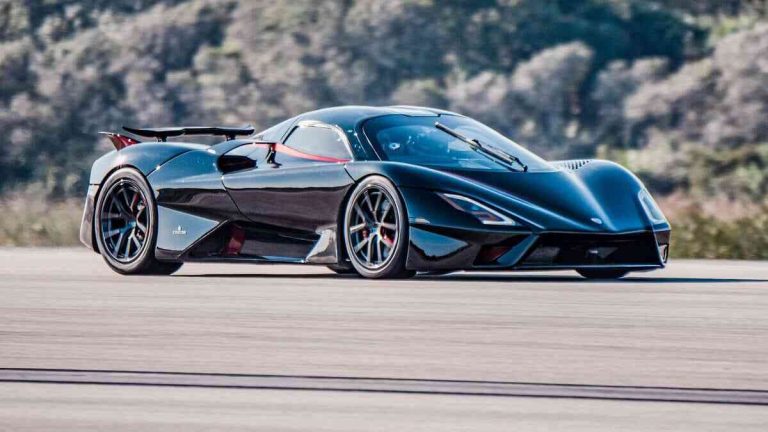
2. SSC Tuatara

Verified Top Speed: 282.9 mph
Claimed Peak Speed: 331 mph
Engine: 5.9L Twin-Turbo V8
Horsepower: 1,750 hp
Country: USA

The SSC Tuatara stirred the auto world with its claimed top speeds, though only the verified 282.9 mph run counts officially. Still, it’s one of the fastest production cars in 2025.

3. Koenigsegg Jesko Absolut

Estimated Top Speed: 330+ mph
Engine: 5.0L Twin-Turbo V8
Horsepower: 1,600 hp
Country: Sweden

The Jesko Absolut was built for speed. Designed to be the fastest Koenigsegg ever, its ultra-low drag coefficient and lightweight frame suggest it could soon steal the crown.

4. Hennessey Venom F5

Target Top Speed: 311+ mph
Engine: 6.6L Twin-Turbo V8
Horsepower: 1,817 hp
Country: USA

Named after a Category 5 tornado, the Venom F5 packs monstrous horsepower with a carbon fiber chassis. It’s not just a car; it’s a road-going rocket.

5. Rimac Nevera

Top Speed: 258 mph
Engine: Quad Electric Motors
Horsepower: 1,914 hp
Country: Croatia

The Nevera has become the benchmark for electric speed. With lightning-fast acceleration and over 1,900 horsepower, it proves that EVs are not just clean — they’re also blisteringly fast.

6. Bugatti Bolide

Estimated Top Speed: 273+ mph
Engine: 8.0L W16
Horsepower: 1,825 hp
Country: France

Though built primarily for track use, the Bugatti Bolide is technically a production vehicle. Its power-to-weight ratio is among the best ever engineered.

7. Lotus Evija

Top Speed: 217 mph
Engine: Fully Electric
Horsepower: 2,000 hp
Country: United Kingdom

A pure-electric hypercar with futuristic design and massive power. The Lotus Evija continues to amaze enthusiasts with its elegance and performance.

8. Pininfarina Battista

Top Speed: 221 mph
Engine: Electric (based on Rimac technology)
Horsepower: 1,900 hp
Country: Italy

Designed in Italy and engineered with Rimac power, the Battista delivers an elegant, luxurious experience along with gut-wrenching speed.

9. Ferrari SF90 Stradale

Top Speed: 211 mph
Engine: V8 Plug-In Hybrid
Horsepower: 986 hp
Country: Italy

While not the fastest on paper, the SF90 is Ferrari’s bold entrance into hybrid hypercars. With razor-sharp handling and Formula 1 influence, it’s a masterpiece.

10. Lamborghini Revuelto

Top Speed: 217 mph
Engine: Plug-in Hybrid V12
Horsepower: 1,001 hp
Country: Italy

Replacing the Aventador, the Revuelto is Lamborghini’s first high-performance hybrid vehicle. A hybrid V12 beast that blends tradition with innovation.

Electric Cars Changing the Game

Electric vehicles are no longer just about susta+inability — they’re redefining speed. Cars like the Rimac Nevera, Lotus Evija, and Battista challenge traditional combustion hypercars with instant torque and over 1,900 horsepower.

Key Benefits of Electric Speed:

  • Instant acceleration
  • Fewer moving parts and reduced mechanical lag
  • Lower center of gravity for better handling
  • Regenerative braking

What Makes These Cars So Fast

Several factors make these cars capable of such incredible speed.

Aerodynamics
Sculpted bodies, active spoilers, and low drag designs reduce resistance and help maintain control at high speeds.

Horsepower and Torque
Most of these machines produce over 1,500 horsepower, allowing them to go from 0 to 60 mph in under 2.5 seconds.

Lightweight Construction
Carbon fiber, aluminum alloys, and titanium components reduce overall weight while maintaining structural strength.

Transmission and Tires
Advanced gearboxes and custom-engineered tires ensure that power is efficiently transferred to the road at ultra-high speeds.

Future of Production Car Speed

By 2030, we could see the 350 mph barrier broken. Emerging technologies expected to influence the future of speed include:

  • Jet-assist propulsion
  • AI-driven aerodynamic control
  • Solid-state batteries
  • Graphene-based construction materials

Brands like Bugatti, Koenigsegg, Hennessey, and Rimac are already exploring these innovations.

Quick Comparison Table

Car Model Top Speed Engine Type Horsepower Country
Bugatti Chiron SS 300 Plus 304.77 mph W16 1,578 hp France
SSC Tuatara 282.9 mph V8 Twin Turbo 1,750 hp USA
Koenigsegg Jesko Absolut 330+ mph V8 Twin Turbo 1,600 hp Sweden
Hennessey Venom F5 311+ mph V8 Twin Turbo 1,817 hp USA
Rimac Nevera 258 mph Electric 1,914 hp Croatia
Bugatti Bolide 273+ mph W16 1,825 hp France
Lotus Evija 217 mph Electric 2,000 hp UK
Pininfarina Battista 221 mph Electric 1,900 hp Italy
Ferrari SF90 Stradale 211 mph Hybrid V8 986 hp Italy
Lamborghini Revuelto 217 mph Hybrid V12 1,001 hp Italy

Note: Some speeds are estimated or unverified

Final Thoughts

The title of the fastest production car in the world in 2025 is a fierce competition. Whether it’s the Bugatti breaking 300 mph, Koenigsegg pushing boundaries, or Rimac proving that electric cars can dominate, these machines represent the best of human engineering.

As technology continues to evolve, these speed records will only grow more competitive. Until then, these cars inspire awe, innovation, and a relentless drive for more.

CKYCRR Record – Meaning, Benefits & How to Access

In the modern digital age, where financial data security and regulatory compliance are paramount, India has introduced several reforms to streamline customer identification processes across the financial sector. One such initiative is the CKYCRR or Central KYC Records Registry. Despite its significance, many people are still unaware of what a CKYCRR record is, why it is important, and how to use it. This article dives deep into the concept of CKYCRR, explaining its full form, benefits, structure, how to retrieve your CKYCRR number, and answers to frequently asked questions. If you’re engaging with any financial institution in India—be it a bank, insurance company, mutual fund, or NBFC—understanding CKYCRR is essential.

For a foundational overview, read our main article: What is a CKYCRR Record

What Is CKYCRR? (Full Form & Overview)

CKYCRR stands for Central Know Your Customer Records Registry. It is a centralized repository that stores the KYC (Know Your Customer) information of customers who engage with financial institutions across India. Launched by CERSAI (Central Registry of Securitisation Asset Reconstruction and Security Interest of India) in 2016, this registry is part of the government’s efforts to reduce redundancy, increase transparency, and strengthen the financial compliance ecosystem. When a customer completes a KYC process with any registered financial institution, their details are uploaded to this central registry. A unique 14-digit number, known as the KYC Identification Number (KIN) or CKYCRR Record-Bearing Reference, is then issued to the customer. This number can be used to retrieve KYC data when dealing with other institutions, thus eliminating the need for repeated KYC submissions.

Key Features of CKYCRR

Centralized Storage: All KYC information is stored in one secure location.

Unique Identifier: Customers receive a 14-digit KIN after their KYC is uploaded.

Single Submission: KYC only needs to be done once across all financial services.

Regulatory Compliance: Helps financial institutions comply with PMLA (Prevention of Money Laundering Act) and RBI norms.

Digital Access: Allows easy access and updating of KYC details.

Why CKYCRR Was Introduced

Prior to CKYCRR, customers had to repeat the KYC process each time they opened a new account with a bank, NBFC, insurance firm, or mutual fund company. This not only created a cumbersome experience but also led to duplication and potential security concerns. CKYCRR aims to:

Simplify the customer onboarding process

Enhance customer experience

Prevent money laundering and fraud

Reduce operational costs for institutions

Maintain up-to-date, standardized customer data

How Does the CKYCRR Process Work?

The CKYCRR process is straightforward but involves a few critical steps:

KYC Submission: You submit your KYC details (identity proof, address proof, photo, etc.) to a reporting financial institution.

Verification: The institution verifies your documents and uploads them to the CKYCRR database.

Generation of KIN: Once the data is verified and uploaded, CERSAI issues a 14-digit KYC Identifier (KIN).

Record Sharing: You can use this number for all subsequent financial transactions requiring KYC. For instance, if you’ve opened a savings account at Bank A and received a KIN, you can use that same number to open a fixed deposit at NBFC B without redoing KYC.

Benefits of CKYCRR for Customers and Institutions

For Customers:

Time-Saving: Submit your KYC only once.

Convenient: Use one number across all financial services.

Secure: Data is stored in an encrypted and centralized manner.

Reduced Hassle: No need to carry physical documents repeatedly.

Transparency: Customers can request updates and view their records.

For Institutions:

Operational Efficiency: Reduces repetitive KYC verification tasks.

Cost-Effective: Saves money spent on processing and storing physical records.

Improved Compliance: Meets regulatory standards effectively.

Fraud Prevention: Standardized data reduces identity theft risk.

How to Retrieve or Access Your CKYCRR Record

You can retrieve your CKYCRR number (KIN) through the following methods:

Check Bank Documents: Some banks print the KIN on account opening forms or passbooks.

Online Banking Portals: Log in to your bank or NBFC account and navigate to the KYC section.

SMS/Email Communication: Some institutions send the KIN via SMS or email after successful verification.

Contact Customer Support: Call your bank or NBFC’s helpline for help in retrieving your number.

Missed Call Services: Certain banks offer missed call facilities to receive your KYC identifier.

Note: As of now, there is no universal online CKYCRR portal for public access. All communication must go through authorized reporting entities.

Updating or Modifying Your CKYCRR Record

If your address, name, or any other personal information changes, you must:

Notify a registered financial institution

Submit updated documents

The institution will verify and re-upload your KYC data.

Your KIN remains the same, but your record gets updated.

This ensures that your latest information is available across all institutions where you’ve used your KIN.

FAQs About CKYCRR

  1. Is CKYCRR mandatory for all financial customers?

Yes. It’s required under regulations from SEBI, IRDAI, RBI, and PFRDA.

  1. Can I have multiple CKYCRR numbers?

No. Each customer receives only one KIN linked to their PAN/Aadhaar.

  1. Is my CKYCRR data secure?

Yes. Data is encrypted and accessible only to authorized reporting entities.

  1. What happens if I lose my CKYCRR number?

You can recover it by contacting your bank or financial institution.

  1. Can I update my KYC through CKYCRR directly?

No. All updates must go through a registered financial institution.

Future of CKYCRR

The CKYCRR is expected to undergo digital transformations in the coming years. Enhancements may include:

Online customer access and verification

Blockchain integration for better security

Consent-based data sharing

Automated update notifications

These changes aim to empower customers further and ensure seamless interoperability across platforms.

Conclusion

The CKYCRR record is an innovative step in simplifying and securing the KYC process across India’s financial ecosystem. With a single KIN, customers no longer need to go through repeated document submissions. At the same time, institutions benefit from reduced costs and better compliance. Understanding your CKYCRR record, knowing how to retrieve or update it, and leveraging its benefits can make your financial journey smoother, safer, and more efficient.

To learn the basics, read our main article: What is a CKYCRR Record

10 Real-Life Examples of Codes of Conduct in Organizations 

Meta Description: Explore 10 real-life examples of how companies implement a code of conduct. Learn how these guidelines shape workplace behavior, ethics, and compliance.

A code of conduct is a set of rules that outlines the social norms, responsibilities, and proper practices for individuals within an organization. These codes are essential for maintaining ethical standards, fostering a positive workplace environment, and protecting both the organization and its members. But what does a code of conduct look like in real-world scenarios? In this article, we examine 10 real-life examples from top companies and nonprofits that effectively use a code of conduct to guide behavior and ensure organizational integrity.

Want to start with the basics? 

1. Google – Respect & Integrity

Google’s code of conduct famously begins with the phrase, “Don’t be evil.” While simple, this statement encapsulates the company’s emphasis on respect, honesty, and integrity. Employees are expected to avoid conflicts of interest, maintain confidentiality, and uphold inclusive behavior. Harassment, discrimination, or retaliation of any kind is strictly prohibited. Google’s open-door policy encourages employees to report any ethical violations without fear of reprisal.

2. Apple – Confidentiality & Innovation

Apple’s code of conduct focuses on protecting intellectual property, respecting user privacy, and maintaining product confidentiality. Employees are reminded that they are brand ambassadors and must uphold the highest levels of integrity, particularly in public spaces or on social media. Apple also encourages employees to act responsibly in matters of environmental sustainability and human rights.

3. Starbucks – Diversity & Customer Respect

Starbucks places great emphasis on diversity, equity, and inclusion in its code of conduct. Employees are required to treat every customer and coworker with dignity and respect. Anti-discrimination policies are central to Starbucks’ values. The company also trains staff regularly on unconscious bias and encourages open dialogue through internal employee forums.

4. Coca-Cola – Anti-Bribery & Fair Competition

The Coca-Cola Company has a robust code that addresses bribery, corruption, and ethical sourcing. Employees must follow laws related to fair competition, and the company has a strict zero-tolerance policy on bribery. Coca-Cola also insists on responsible marketing, especially when promoting its products to children and vulnerable groups.

5. Microsoft – Privacy & Cybersecurity Ethics

Microsoft’s code of conduct focuses on building trust through transparency, privacy, and data protection. Employees are trained in responsible data handling, compliance with GDPR, and cybersecurity best practices. The company expects staff to avoid spreading misinformation and to uphold honesty in every customer interaction.

6. IKEA – Sustainability & Employee Welfare

IKEA integrates sustainability directly into its code of conduct. Employees are encouraged to consider the long-term environmental impact of their decisions, including energy usage, material sourcing, and waste management. IKEA also maintains strict labor rights protections across its global supply chain.

7. Unilever – Business Integrity

Unilever’s code of conduct includes detailed policies on anti-bribery, health and safety, and environmental management. It also promotes social responsibility, urging employees to make ethical decisions that benefit both the company and the community. Unilever’s ethics committee regularly audits compliance and offers anonymous whistleblowing options.

8. Facebook – Transparency & Public Trust

Meta’s code of conduct emphasizes public trust, ensuring accuracy in communication and ethical product development. Employees are held accountable for protecting the safety and well-being of users. Transparency, especially in handling user data and political content, is a priority. Regular ethics workshops are mandatory for team leads.

9. Tesla – Innovation With Responsibility

Tesla encourages innovation but within ethical boundaries. The company’s code includes guidelines on safety, environmental responsibility, and fair treatment of all employees. Tesla promotes a zero-harassment workplace and has clear expectations regarding the ethical use of AI and autonomous technologies.

10. Nonprofits – Accountability in Service

Nonprofit organizations like the Red Cross and World Wildlife Fund (WWF) have codes focused on donor transparency, volunteer integrity, and service ethics. These codes often include specific language regarding accountability and honesty in fundraising and community impact. Volunteers and staff are trained in ethical communication and are expected to report any misuse of funds or resources.

Key Components Shared by All Codes

While each organization’s code of conduct is unique, they share common elements:

Integrity: Doing the right thing even when no one is watching.

Respect: Treating all individuals with dignity, fairness, and courtesy.

Compliance: Following local laws and company policies.

Accountability: Taking responsibility for actions and decisions.

Transparency: Being honest and open in communications.

The Impact of a Strong Code of Conduct

Organizations with well-defined and well-enforced codes of conduct often:

Experience fewer internal conflicts

Retain top talent who value integrity

Build trust with customers and partners

Avoid costly legal and PR issues

A code of conduct is more than a document; it’s a living framework that influences the culture of an organization.

Conclusion

These real-life examples prove that a code of conduct is essential for ethical business operations. From tech giants like Google and Microsoft to nonprofits like the Red Cross, every responsible organization puts clear behavioral expectations in writing. A well-crafted code helps protect the brand, the employees, and the broader community.

Want to understand the fundamentals? Go back to our in-depth guide: What Is a Code of Conduct. 

Creating a strong, actionable code and ensuring it embrace every day is key to long-term success and integrity in any field.

What Is Code of Conduct? A Complete Guide for Professionals

In every workplace, school, or professional setting, certain behaviors and principles guide how people are expected to act. This set of rules and ethical expectations is known as a Code of Conduct. But what exactly is a code of conduct, and why is it important? This article answers that question in detail, offering practical insights into how codes of conduct shape behavior, protect integrity, and build trust in organizations.

What Is Code of Conduct?

A Code of Conduct is a formal document or set of guidelines that outlines the expected behavior, responsibilities, and ethical standards of individuals within an organization or community. It helps define what is acceptable and unacceptable behavior, ensuring that everyone is aligned with the organization’s values and mission.

Keyword Definition:

  • Code of Conduct: A written set of rules that explains how members of a group or organization should behave, especially in terms of ethics, respect, professionalism, and compliance.

Purpose of a Code of Conduct

The main goal of a code of conduct is to provide a clear framework for ethical behavior and decision-making. It helps individuals understand what is expected of them and sets the tone for a respectful and professional environment.

Key purposes include:

  • Promoting ethical conduct and integrity
  • Preventing misconduct, harassment, or conflicts of interest
  • Protecting the reputation of the organization
  • Encouraging transparency and accountability
  • Ensuring compliance with laws and regulations

Key Components of a Code of Conduct

Although the exact content may vary based on the industry, company, or institution, a well-written code of conduct usually includes:

  1. Core Values and Ethics
  • Honesty, respect, fairness, and responsibility
  • Zero tolerance for discrimination, harassment, or unethical practices
  1. Professional Behavior
  • Dress codes, language, punctuality, and respect for colleagues
  • Use of company resources responsibly
  1. Compliance and Legal Obligations
  • Adherence to relevant laws, industry regulations, and internal policies
  • Confidentiality and data protection
  1. Conflict of Interest
  • Disclosure of personal interests that may affect business decisions
  • Avoiding favoritism or biased decisions
  1. Reporting Misconduct
  • Guidelines for reporting unethical behavior safely and confidentially
  • Protection against retaliation for whistleblowers

Why Is Code of Conduct Important?

Understanding what is code of conduct is essential for maintaining a healthy, ethical, and legally compliant work environment. Here are some reasons why it’s crucial:

  1. Builds Trust

A clear code of conduct demonstrates that the organization is serious about fairness and integrity. This builds trust among employees, customers, investors, and the public.

  1. Reduces Risk

It helps prevent legal issues, workplace conflicts, and unethical decisions by setting clear boundaries.

  1. Creates a Safe and Respectful Workplace

Employees feel safer and more valued when rules around behavior and respect are clearly established and enforced.

  1. Supports Decision-Making

Employees often face situations where ethical judgment is needed. A code of conduct offers guidance in those moments.

  1. Protects Organizational Reputation

Inappropriate or unethical behavior can damage an organization’s public image. A code of conduct helps minimize that risk by proactively defining standards.

Examples of Code of Conduct in Action

  • In Companies: Tech firms like Google or Microsoft have detailed codes addressing ethical innovation, anti-harassment, and workplace inclusion.
  • In Schools: Students must follow codes covering academic honesty, respect for teachers, and proper use of school resources.
  • In Government: Public officials adhere to codes focusing on integrity, transparency, and serving the public interest.

Code of Conduct vs Code of Ethics

While they are often used interchangeably, they have slight differences:

  • Code of Conduct focuses on specific behaviors and rules (what you should or should not do).
  • Code of Ethics focuses more on values and moral principles (why you should do something).

Both work together to shape the culture and standards of an organization.

How to Implement a Code of Conduct

For a code of conduct to be effective, organizations must:

  1. Clearly Write and Communicate It: Make it accessible and easy to understand.
  2. Train Employees: Educate staff on how to apply the code in real-life situations.
  3. Enforce It Consistently: Ensure that everyone is held accountable, regardless of role or seniority.
  4. Review and Update: As industries and laws evolve, the code should be regularly reviewed and updated.

Conclusion

what is code of conduct? A code of conduct is more than just a list of rules—it’s a foundational document that guides how individuals behave and interact within an organization or group. It fosters a positive culture, protects against unethical behavior, and ensures everyone is working toward shared goals with mutual respect.

Whether you’re an employee, a manager, a student, or a policymaker, understanding what a code of conduct is—and why it matters—can help you contribute to a more ethical and professional environment.

What Is a CKYCRR Record? Full Guide to Meaning & Uses

The CKYCRR record is a key component of India’s digital financial infrastructure. It plays a crucial role in streamlining and securing the Know Your Customer (KYC) process for individuals engaging with banks, insurance companies, mutual funds, and other financial institutions.

What Does CKYCRR Stand For?

CKYCRR stands for Central KYC Records Registry. It is a centralized repository where your verified KYC information is stored digitally. This includes documents such as your PAN, Aadhaar, passport, proof of address, and a photograph.

The system is managed by the Central Registry of Securitisation Asset Reconstruction and Security Interest of India (CERSAI) and functions under the regulations of bodies like the Reserve Bank of India (RBI), the Securities and Exchange Board of India (SEBI), and the Insurance Regulatory and Development Authority of India (IRDAI).

How Does the CKYCRR System Work?

1. Submission of KYC Documents

When you open a bank account, apply for a loan, invest in mutual funds, or purchase insurance, you are required to submit KYC documents. The financial institution you apply through is called the Reporting Entity (RE).

2. Uploading to CKYCRR

Once your documents are verified, the RE uploads your data to the CKYCRR. This information is stored in a secure database, and a unique 14-digit number called the KYC Identifier (KIN) is assigned to your record.

3. Retrieval and Sharing

Once your CKYCRR record exists, you can share your KYC details with any other financial institution using your KIN. With your consent, these institutions can fetch your KYC data from the registry, eliminating the need to resubmit documents repeatedly.

What Is a CKYCRR Record-Bearing Reference?

A CKYCRR record-bearing reference refers to your unique 14-digit KYC Identifier Number (KIN). This number links to your stored KYC record in the central registry. Financial institutions use this reference number to retrieve your verified data when you interact with them.

Who Uses CKYCRR?

CKYCRR is utilized by a wide range of financial entities, including:

  • Public and private banks
  • Cooperative banks
  • Mutual fund companies
  • Insurance providers
  • Non-Banking Financial Companies (NBFCs)
  • Pension fund managers

All of these entities are required by law to comply with KYC norms and are authorized to access CKYCRR data, with the customer’s permission.

Benefits of the CKYCRR Record

1. One-Time KYC

You only need to complete the KYC process once. After your CKYCRR record is created, you can use the same KIN across multiple financial institutions.

2. Time and Cost Efficiency

CKYCRR reduces delays and administrative costs in verifying customer identity, allowing for faster onboarding and approval processes.

3. Greater Accuracy

Since records are stored digitally and centrally, there is less chance of errors, duplication, or outdated information being used.

4. Enhanced Security

Digital records minimize the risk of physical document tampering, loss, or fraud.

5. Regulatory Compliance

CKYCRR supports institutions in meeting KYC and anti-money laundering (AML) regulations set by regulatory authorities.

CKYCRR 2.0: The Next Phase

A new version of CKYCRR, often referred to as CKYCRR 2.0, is under implementation with several improvements:

  • Use of facial recognition and AI to detect duplicate records
  • Better integration with platforms like DigiLocker
  • Real-time notifications and metadata access to track usage
  • Introduction of record “trust scores” for transparency

These enhancements are aimed at making the system more secure, efficient, and user-friendly.

What Do CKYCRR Alerts Mean?

If you’ve received a message like:

“Your CKYCRR record bearing reference 12345678901234 was fetched by XYZ Bank on 01/07/2025 – CERSAI”

this means that a financial institution has accessed your KYC record using your KIN. These alerts are sent for transparency and security, ensuring you are aware when and by whom your data is accessed.

If You Receive Unexpected Alerts

Sometimes, users receive such notifications without recalling any recent applications. If that happens:

  • Check if someone else (like a family member) used your documents
  • Review your credit report for any unauthorized applications
  • Contact the bank or institution named in the message
  • Report concerns to CERSAI or the financial regulator

How to Check or Update Your CKYCRR Record

To Check:

  • Some banks list the KIN in passbooks or statements
  • Certain apps and portals allow you to check using your PAN or Aadhaar
  • Missed call services or SMS alerts may be available from your bank

To Update:

  • Visit a bank branch, mutual fund office, or registered intermediary
  • Submit updated address, phone number, or ID proof
  • Ensure the RE uploads the changes to CKYCRR for the updates to reflect system-wide

Conclusion

What Is a CKYCRR Record? A CKYCRR record is your digital KYC identity used across India’s financial ecosystem. It simplifies the customer verification process by enabling financial institutions to access your verified documents with your consent using a single identifier.

Whether you’re opening a savings account, applying for a loan, or investing in mutual funds, having an updated and accurate CKYCRR record speeds up the process and improves security.

What Is a Quadrilateral? Types, Properties & Examples

In geometry, shapes are the building blocks of the universe. Among the many types of polygons, quadrilaterals are some of the most widely used and recognizable. From the screen of your smartphone to the pages of your notebook, quadrilaterals are everywhere. But what exactly is a quadrilateral? What are its different types, properties, and uses?

This article explores quadrilaterals in depth—covering definitions, classifications, mathematical properties, real-world applications, and more.

Definition of a Quadrilateral

A quadrilateral is a polygon with four sides, four vertices (corners), and four angles. The term comes from the Latin words quadri (meaning “four”) and latus (meaning “side”).

In other words, any closed two-dimensional shape with four straight sides is considered a quadrilateral.

Basic Properties of a Quadrilateral

Every quadrilateral, regardless of its type, shares some fundamental properties:

  • It has four sides (edges).
  • It has four angles.
  • The sum of the internal angles of a quadrilateral is always 360 degrees.
  • The shape is closed—its sides connect end to end to form a boundary.

Classification of Quadrilaterals

Quadrilaterals are categorized into simple and complex types, and further into concave and convex based on their angles.

  1. Simple vs. Complex Quadrilaterals
  • Simple Quadrilaterals: Sides only meet at vertices and don’t cross each other (e.g., square, rectangle).
  • Complex Quadrilaterals (also called crossed quadrilaterals): One pair of opposite sides cross each other (e.g., bowtie or butterfly shape).
  1. Concave vs. Convex Quadrilaterals
  • Convex Quadrilateral: All interior angles are less than 180°, and diagonals lie inside the shape.
  • Concave Quadrilateral: One interior angle is greater than 180°, and at least one diagonal lies outside.

Types of Quadrilaterals (With Definitions & Properties)

Let’s look at the major types of quadrilaterals, most of which are parallelograms or trapezoids:

  1. Parallelogram

A quadrilateral with opposite sides that are parallel and equal in length.

Properties:

  • Opposite angles are equal.
  • Diagonals bisect each other.
  • Adjacent angles are supplementary (add up to 180°).

Examples: Rhombus, rectangle, square

  1. Rectangle

A parallelogram with four right angles (90°).

Properties:

  • Opposite sides are equal and parallel.
  • All angles are right angles.
  • Diagonals are equal and bisect each other.
  1. Square

A regular quadrilateral with four equal sides and four right angles.

Properties:

  • All sides are equal.
  • All angles are 90°.
  • Diagonals are equal, bisect each other at 90°, and divide the square into two congruent isosceles right triangles.
  1. Rhombus

A parallelogram with all four sides equal in length, but angles are not necessarily 90°.

Properties:

  • Opposite angles are equal.
  • Diagonals bisect each other at 90° but are not necessarily equal.
  • Diagonals bisect the angles.
  1. Trapezoid (US) / Trapezium (UK)

A quadrilateral with one pair of parallel sides.

Properties:

  • May or may not have equal non-parallel sides.
  • If the non-parallel sides are equal and angles are equal, it becomes an isosceles trapezoid.
  1. Kite

A quadrilateral with two pairs of adjacent sides that are equal.

Properties:

  • One pair of opposite angles are equal.
  • Diagonals intersect at right angles.
  • One diagonal bisects the other.

Diagonals in Quadrilaterals

A diagonal is a line connecting opposite vertices.

  • A quadrilateral has two diagonals.
  • In some types (like squares and rectangles), diagonals are equal.
  • In others (like rhombuses), diagonals are perpendicular but unequal.

Angle Sum Property

One of the fundamental theorems in geometry is the Angle Sum Property of Quadrilaterals:

The sum of the interior angles of any quadrilateral is always 360 degrees.

This can be proved by dividing the quadrilateral into two triangles. Since each triangle has 180°, the total is 180° × 2 = 360°.

Formulae Related to Quadrilaterals

Area Formulas

Shape Area Formula
Square side²
Rectangle length × width
Parallelogram base × height
Trapezoid ½ × (sum of parallel sides) × height
Rhombus ½ × (diagonal₁ × diagonal₂)

Perimeter Formulas

Shape Perimeter Formula
Square 4 × side
Rectangle 2 × (length + width)
Parallelogram 2 × (base + side)
Trapezoid sum of all sides
Rhombus 4 × side

Real-World Applications of Quadrilaterals

Quadrilaterals are not just mathematical concepts—they are everywhere around us:

  • Architecture: Windows, doors, floors, and buildings often use squares, rectangles, and trapezoids.
  • Engineering: Bridges and mechanical linkages often involve parallelograms and kites.
  • Graphic Design: Screens, layouts, posters, and design grids use quadrilateral geometry.
  • Land Surveying: Irregular quadrilaterals model land plots.

Fun Facts About Quadrilaterals

  • A square is both a rectangle and a rhombus.
  • All squares and rectangles are parallelograms, but not all parallelograms are squares or rectangles.
  • The British use the term “trapezium” for what Americans call a “trapezoid” (and vice versa!).
  • Quadrilaterals can be cyclic, meaning all their vertices lie on a circle (e.g., rectangles, isosceles trapezoids).

How to Identify a Quadrilateral

When given a shape, follow these steps to determine its type:

  1. Count the sides – Are there four?
  2. Check for parallel sides – Are any sides parallel or equal?
  3. Measure the angles – Are any right angles?
  4. Look at the diagonals – Are they equal? Do they bisect at 90°?

Based on this analysis, you can classify the quadrilateral correctly.

Conclusion

A quadrilateral is a foundational concept in geometry that encompasses a wide variety of shapes, from everyday rectangles and squares to complex kites and trapezoids. Understanding their properties helps us navigate fields like architecture, engineering, art, and design with better precision.

Whether you’re solving problems in a classroom or building models in the real world, knowledge of quadrilaterals gives you a solid edge in recognizing, analyzing, and utilizing geometric forms.

What is the Fastest Car in the World?

Speed is a symbol of automotive excellence—a showcase of engineering, innovation, and extreme performance on public roads. In 2025, for a lot of people, the battle for the crown of “world’s fastest production car” continues, with manufacturers pushing boundaries across combustion and electric powertrains. Below, we explore the top contenders, verified records, and emerging challengers in this high-stakes race.

Top Production Speed Records

SSC Tuatara – 474 km/h (≈ 295 mph) (Verified)

The SSC Tuatara, built by SSC North America, currently holds the highest verified two-way average speed for a production car. In a carefully documented run, it hit 474.8 km/h (≈295 mph) with its twin-turbo V8 generating 1,750 hp. Earlier disputed claims had it topping 532 km/h, but independent testing later confirmed the more conservative figure .

Hypercar Threats: Claimed Highest Speeds

Koenigsegg Jesko Absolut – Theoretical 531–500 km/h (≈330–310 mph)

Koenigsegg’s Jesko Absolut is engineered with one goal: breaking speed records and potentially setting new world records. Its low-drag body and powerful 1,600 hp twin‑turbo V8 theoretically support speeds up to 531 km/h (≈330 mph). Real-world runs have yet to confirm this, but the car’s advanced aerodynamics and simulations place it at the pinnacle of potential official top speed capabilities, with a caveat regarding the achievement of such figures in practice.

Hennessey Venom F5 – Claimed 500 km/h (≈311 mph)

The U.S.-built Hennessey Venom F5 boasts a 6.6-liter twin-turbo V8 pumping out 1,817 hp. Its makers claim a top speed of 500 km/h (≈311 mph). Though official testing toward this goal is ongoing, it remains a formidable challenger in the hypercar realm.

Established Legends

Bugatti Chiron Super Sport 300+ – 490 km/h (≈304 mph)

Bugatti made history in 2019 when the Chiron Super Sport 300+ became the first production car to exceed 300 mph, recording 490.48 km/h on Germany’s Ehra-Lessien track. While the run was one-way and electronically limited to lower speeds on the road, it remains a milestone in automotive achievement.

Electric Revolutionaries

Rimac Nevera – Verified 412 km/h (≈256 mph)

This Croatian electric hypercar, with four electric motors delivering a collective 1,914 hp, is currently the fastest production EV. It has been verified at 412 km/h (≈256 mph), proving electric drivetrains can rival their combustion counterparts on top speed.

Aspark Owl – Claimed 438 km/h (≈273 mph)

Japan’s Aspark claimed its Owl SP600 hit 438 km/h during testing. This all-electric hypercar is also renowned as the fastest accelerating production vehicle—0–100 km/h in under 1.9 seconds.

Fastest Cars Available to Buy (Mainstream or More Accessible High-Speed Cars)

For speed enthusiasts who are keen to experience high performance without the ultra-exclusive price tags, several mainstream cars on the market today offer thrilling speed and advanced technology. One standout contender is the Ford Mustang Shelby GT500, boasting a supercharged 5.2-liter V8 engine that churns out an impressive 760 hp, allowing it to sprint from 0 to 60 mph in just 3.3 seconds. Another impressive option is the Chevrolet Corvette Stingray, equipped with a naturally aspirated 6.2-liter V8 capable of reaching a top speed of around 194 mph—an astonishing figure for a vehicle starting at a relatively affordable price. Not to be overlooked, the Tesla Model S Plaid, with its tri-motor all-wheel-drive system, claims to accelerate from 0 to 60 mph in under 2 seconds, showcasing that electric can indeed compete with traditional powerhouse performance. These cars highlight the industry’s focus on making exhilarating speed accessible to more drivers, blending cutting-edge engineering with everyday usability for those seeking a taste of the fast lane.

Summary Comparison

Car | Powertrain | Top Speed | Status

SSC Tuatara | V8 ICE | 474 km/h (verified) | Fastest verified production car – holds a record in the Guinness Book of Records

Bugatti Chiron Super Sport | W16 ICE | 490 km/h (one-way run) | First to 300 mph barrier

Koenigsegg Jesko Absolut | V8 ICE | Theoretical ~531 km/h | Record contender

Hennessey Venom F5 | V8 ICE | Claimed 500 km/h | Ongoing high-speed goals

Rimac Nevera | Electric | 412 km/h (verified) | Fastest EV

Aspark Owl SP600 | Electric | Claimed 438 km/h | Fastest accelerating EV

Verdict: Who’s No. 1?

  1. Currently fastest production car (verified): SSC Tuatara at 474 km/h.
  2. First to break 300 mph: Bugatti Chiron Super Sport 300+.
  3. Theoretical top-spot contender: Koenigsegg Jesko Absolut, with claims of 531 km/h.
  4. Fastest electric: Rimac Nevera (412 km/h).

Why These Speeds Matter

  1. Engineering Superiority: Hitting extreme speeds requires innovations in aerodynamics, materials (e.g., carbon fiber), and powertrain engineering.
  2. Extreme Validation: Success in top-speed tests showcases reliability under extreme stress.
  3. Tech Transfer: Developments often trickle down into mainstream automotive safety and efficiency improvements.

What’s Next?

The race continues with hypercars and supercars like the Venom F5, built by John Hennessey in Florida, USA, and Jesko Absolut pursuing verified records, reminiscent of legendary events such as Le Mans. As electric hypercars evolve, we may soon see EVs challenging combustion titans at the top. Tire and track technologies, as well as global regulations, will shape these future pursuits.

Final Thoughts

While the SSC Ultimate Aero TT and the SSC Tuatara presently hold the production car speed record, the Koenigsegg Jesko Absolut may soon rewrite history. With EVs like Rimac’s Nevera and Aspark’s Owl challenging with electric power, the top-speed crown could see an electric shift in the near future.

Whether fueled by gasoline or electricity, the motorsport spirit lives on—challenging limits, proving innovation, and thrilling speed enthusiasts worldwide.